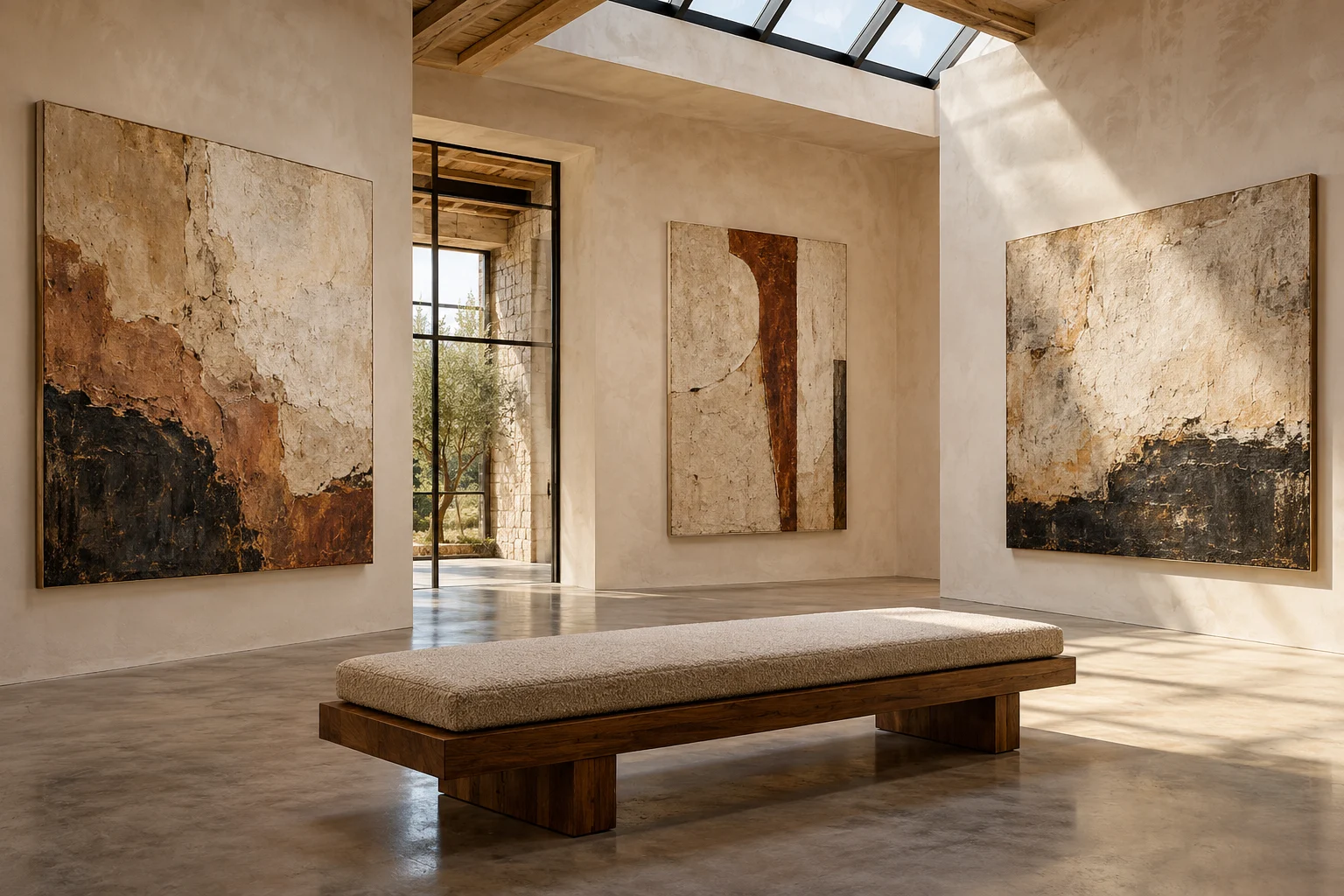
A heavy canvas hangs under a focused spotlight, its surface thick with jagged, ochre strokes that seem to vibrate against the white gallery wall. Nearby, a small, typed card offers a formal explanation of the piece, citing themes of industrial decay and the cyclical nature of urban renewal. You look from the text back to the paint, feeling a disconnect between the cool, intellectual description and the sudden, restless energy the colors evoke in you.
The Weight of the Notebook
For many who frequent Dallas’s evolving cultural corridors, a gallery visit is an active pursuit. You might find yourself carrying a small notebook, capturing fragments of thought: "The blue feels heavy," or "This reminds me of the light on the highway at dusk." These notes are valuable, yet they often lead to a peculiar kind of paralysis. You possess a collection of visceral, personal observations, but they lack a clear next step. You have the data of your own experience, yet you struggle to decide if these notes are merely fleeting impressions or the foundation for something more substantial.
Observation versus Explanation
There is a distinct tradeoff between what a creator intends and what a viewer perceives. The artist’s statement acts as a map, providing a structured way to navigate the work. However, relying solely on that map can sometimes obscure the actual terrain. Your personal response—the way a specific texture makes you feel or the way a shape disrupts your breathing—is a separate, valid piece of evidence. The tension lies in deciding whether to prioritize the artist's provided context or to trust the unpolished reactions written in your margins.
For example, if you are sitting in a quiet studio space observing a minimalist sculpture, your notes might focus entirely on the way the shadow falls across the floor. The artist's plaque, however, might discuss the mathematical precision of the proportions. You are left with a choice: do you attempt to reconcile your focus on light and shadow with their focus on geometry, or do you accept that your experience of the shadow is a complete and sufficient interaction with the art?
Moving Past the Page
If you find yourself staring at a page of disconnected thoughts, wondering how to utilize them, consider the purpose of your engagement. Are you collecting notes to inform a critique, to find inspiration for your own creative projects, or simply to document a moment in time? If the goal is to deepen your understanding, you might ask a gallery docent how the artist's technical choices relate to the themes mentioned on the wall. If the goal is personal reflection, the next step may be as simple as letting the notes sit without the pressure to categorize them.
The value of an art conversation does not depend on reaching a consensus with the artist's intent. Your observations are not errors to be corrected by a formal explanation; they are the primary substance of the encounter. When the notebook is full, the most productive action is often to simply acknowledge that your perspective is its own finished work.